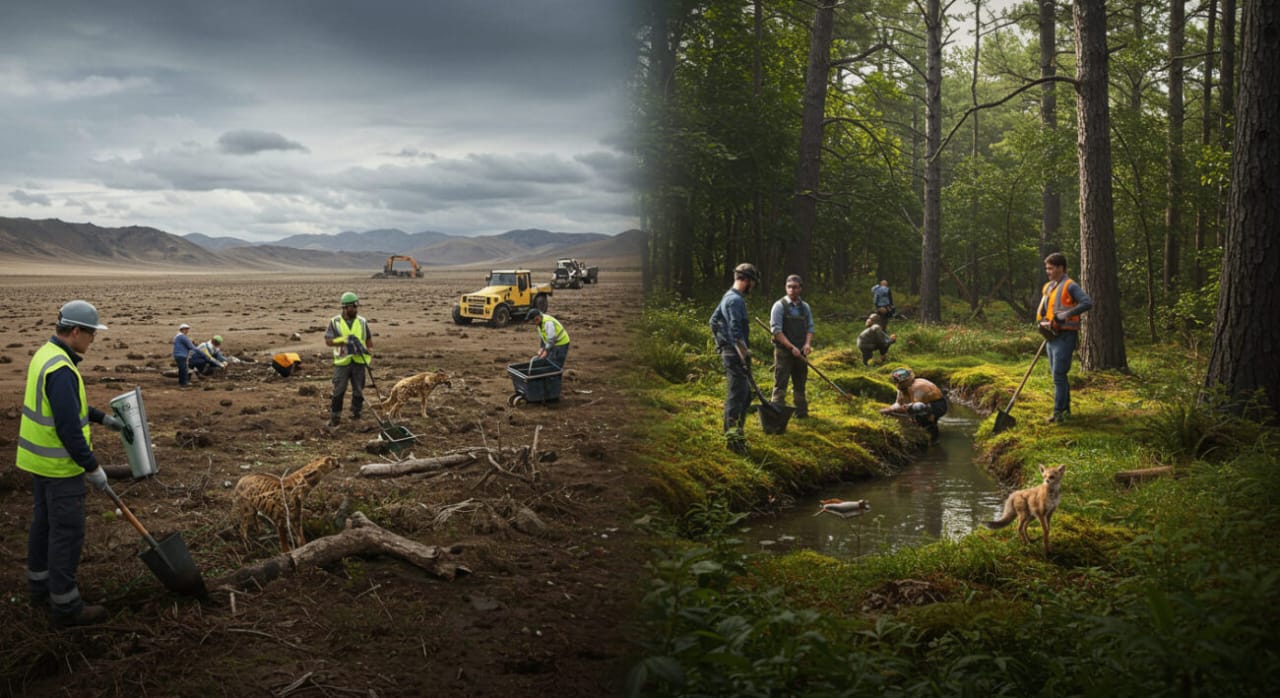
issuance Environmental Permits

As Saudi Arabia continues to experience significant growth in industrial, construction, commercial, and development projects, environmental management has become an essential part of project planning and operational sustainability.
One of the key requirements that project owners and facility operators should understand is the Environmental Permit, an important regulatory tool for managing the potential environmental impacts of different activities and ensuring compliance with applicable environmental requirements in the Kingdom.
What Is an Environmental Permit?
An Environmental Permit is a regulatory approval or authorization associated with a specific activity or project. It establishes the environmental requirements and conditions that the facility must comply with.
The type of permit and applicable requirements may vary depending on the nature of the activity, project location, size, development stage, and potential environmental impacts.
In Saudi Arabia, the National Center for Environmental Compliance (NCEC) oversees the environmental permitting and licensing framework and monitors facilities' compliance with applicable environmental requirements.
Does Every Facility Need an Environmental Permit?
Not all activities have the same environmental characteristics. Therefore, whether a project requires an environmental permit depends on its activity, classification, and applicable regulatory requirements.
Activities that may be subject to environmental requirements include:
- Industrial projects.
- Construction and infrastructure projects.
- Real estate development.
- Mining and quarrying.
- Energy and utility facilities.
- Waste management activities.
- Water and wastewater treatment facilities.
- Activities involving emissions, discharges, or waste that may affect the environment.
The first step is therefore to identify the environmental requirements applicable to the activity, rather than assuming that every project follows the same process.
Why Should Environmental Permitting Be Considered Early?
One common challenge is treating environmental permitting as an administrative procedure to be completed near the end of the design or immediately before operations begin.
Early consideration of environmental requirements can save significant time and cost.
When environmental requirements are identified during the planning stage, they can be incorporated into project design, specifications, construction plans, and operational procedures.
This also allows potential environmental risks to be identified before activities begin and enables appropriate mitigation measures to be incorporated into the project.
What Is Required to Obtain an Environmental Permit?
Requirements vary from one project to another, and there is no single checklist that applies to every facility.
Depending on the activity and its classification, the process may involve:
1. Project and Facility Information
This may include information about the location, nature of the activity, production or operational capacity, and different project phases.
2. Identification of Environmental Aspects
Potential environmental aspects may include:
- Air emissions.
- Wastewater and discharges.
- Waste generation.
- Chemicals and hazardous materials.
- Noise and vibration.
- Soil impacts.
- Water and energy consumption.
- Potential impacts on surrounding environments.
3. Environmental Studies and Reports
Depending on the project's classification and requirements, environmental studies, reports, or Environmental Management Plans may be required.
These documents help identify potential environmental impacts and establish appropriate measures to prevent, minimize, and manage them.
4. Environmental Management Plan
An Environmental Management Plan helps translate environmental requirements into practical procedures that can be implemented and monitored.
It may cover waste management, emissions, discharges, hazardous materials, emergency response, environmental monitoring, responsibilities, and corrective actions.
5. Application and Documentation
Once the required information and documents have been prepared, the application is submitted through the applicable official channels and platforms.
The required documentation may vary according to the activity, project stage, and environmental classification.
An Environmental Permit Is More Than a Document
An Environmental Permit should not be viewed simply as a document that is obtained and filed.
It establishes a framework of environmental requirements that the facility must continue to meet throughout its activities.
Therefore, the organization's responsibility does not end when the permit is issued. Instead, a new phase begins: maintaining compliance with the permit conditions and environmental requirements.
This may include environmental monitoring, reporting, maintaining records, and implementing corrective actions where necessary.
What About Existing Facilities?
Environmental permitting is not only relevant to new projects.
Existing facilities should periodically review their environmental status and confirm that their permits and environmental requirements remain appropriate for their current activities.
Changes in operations, production capacity, processes, or site conditions may require a review of the applicable environmental requirements.
For this reason, periodic environmental compliance reviews can help facilities identify whether their current practices and documentation remain aligned with their regulatory obligations.
What If Compliance Gaps Are Identified?
Environmental reviews may identify gaps such as incomplete records, insufficient monitoring, or operational practices that require improvement.
A proactive approach should include:
- Identifying the non-compliance.
- Determining the root cause.
- Assessing the associated risk.
- Developing an appropriate corrective action.
- Assigning responsibility.
- Establishing a completion date.
- Verifying the effectiveness of the corrective action.
This approach enables organizations to move from simply responding to observations toward a structured environmental compliance management system.
The Role of Environmental Consultants
Environmental permitting can be challenging for organizations without dedicated environmental specialists.
An environmental consultant can provide technical and regulatory support by understanding the project's characteristics, identifying applicable requirements, and preparing the necessary technical documents and studies.
Environmental consulting services may include:
- Reviewing project activities and environmental requirements.
- Assessing the project's environmental conditions.
- Preparing environmental studies and reports.
- Developing Environmental Management Plans.
- Supporting environmental permit applications.
- Reviewing documentation before submission.
- Developing environmental monitoring programs.
- Assessing environmental compliance.
- Identifying compliance gaps.
- Developing corrective and preventive actions.
- Supporting ongoing compliance after permit issuance.
How Should You Choose an Environmental Consultant?
Selecting an environmental consultant should not be based solely on price.
Project owners should consider whether the consultant has relevant experience in the project's sector, understands applicable environmental and regulatory requirements, and has the technical capability to prepare accurate and professional documentation.
It is also important to confirm that the service provider holds the licenses or approvals required to provide the relevant environmental services.
Environmental Permitting Is Part of Project Success
Effective environmental planning is not simply about obtaining a permit. It is about establishing a framework that enables a project to operate responsibly and sustainably.
By identifying environmental requirements early, preparing appropriate studies and plans, and implementing effective monitoring and compliance programs, organizations can reduce environmental and regulatory risks while improving operational performance.
At SAEC, we provide environmental consulting services to help organizations and projects understand environmental requirements, prepare the necessary studies and plans, support environmental permitting processes, and develop effective environmental compliance systems tailored to each project's needs.